
Data for Decision Making: Situation Rooms in Moldova Support War Refugees
Situation rooms can help mitigate crises and facilitate better data management for a wide set of challenges.

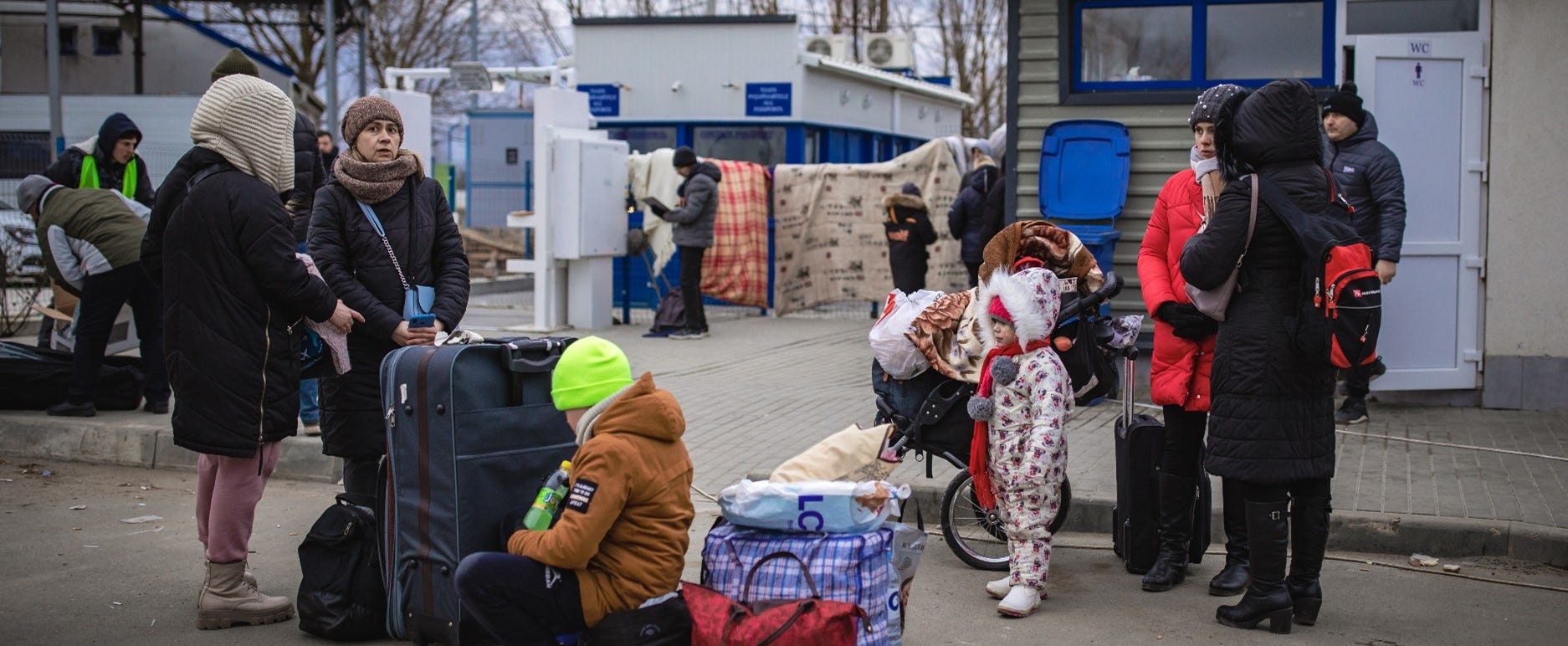
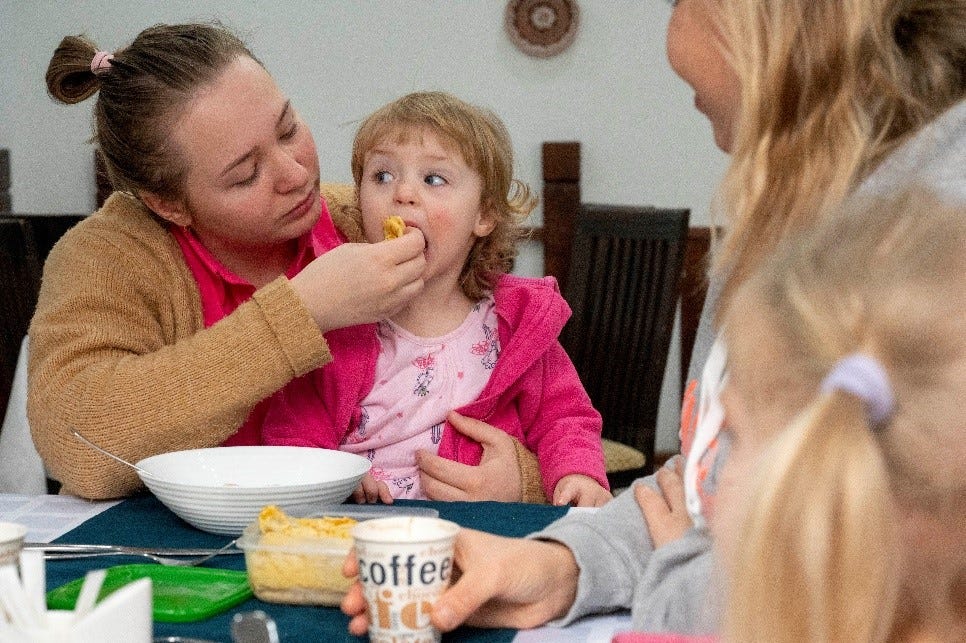
Since late February 2022, more than 780,000 Ukrainians have crossed the border into the Republic of Moldova, and today over 107,000 Ukrainian refugees remain in Moldova.[1] Most are women and children who come with little more than a suitcase and no clear sense of when they can return to their homes.
To help as many refugees as possible find food, housing, health care, and lost family members, Moldovan officials need detailed, up-to-date, and specific information. This includes:
The number of refugees who are entering and/or leaving per day
The geographic distribution of refugees within Moldova
The housing situation of each refugee (e.g., are they with host families or in refugee accommodation centers?)
Basic demographic data, including age, sex, and disability status
The number of unaccompanied children, as well as the number of unauthorized accompanied children, and demographic information on these groups
Collectively, this entails thousands of data points, collected from numerous different sources (border check points, refugee accommodation centers, child protection services, health services, schools, etc.) each with their own methods of data entry, storage, and sharing.
Vasile Maxim, president of Ștefan Vodă, a rural rayon (district) in south-eastern Moldova that borders Ukraine, explained the challenge:
“Since the first days of the war, our rayon received a large number of refugees, who needed assistance and guidance. In order to use the over-solicited rayon’s resources wisely, we needed real data and information to be examined within the commissions organized at the local level. It was quite difficult to get this data in real time for us to make quick decisions.”
As the refugee crisis in Moldova continued to evolve, Palladium offered a data management solution: the situation room.
Also known as a ‘data review room,’ the approach involves centralizing data presentation and decision making in a single, technology-enabled site. At a logistical level, this requires building data analytics and visualization platforms that integrate data from multiple sources, locating a suitable physical location that is accessible to stakeholders, and installing all the necessary digital and communications infrastructure.
Adapting an innovation
The idea to help the Moldovan government deal with the refugee crisis with a situation room arose because Palladium was already doing similar work in other areas.
Palladium had worked on the ground in Moldova for years on the MEASURE Evaluation and Data for Impact (D4I) projects, funded by the United States Agency for International Development (USAID), assisting central and local stakeholders to collect, analyze, and use data for evidence-based decision making to support children in adversity. This included facilitating data review meetings; indeed, since November 2021, 73 of these meetings were held in 24 of 35 rayons of Moldova.
And on a global level, since 2019 the Data for Implementation (Data.FI) project, led by Palladium, had institutionalized formal situation rooms in six countries: Burkina Faso, El Salvador, Guatemala, Honduras, Nigeria, and Tanzania. Each country’s situation room responds to unique local conditions, but generally these facilities help stakeholders address the HIV epidemic, the expansion of COVID-19 vaccination, and access to primary health care.
Through these projects, the advantages of situation rooms became clear.
One, especially in an environment with diffuse digital resources, situation rooms provide specific, up-to-date, and harmonized information. Dashboards integrate or triangulate data from multiple sources, ‘translating’ the raw data so that it can be visualized coherently. This allows stakeholders to more quickly identify and plan for gaps in service provision, program shortcomings, resource needs, and general inefficiencies.
Two, holding regular situation room meetings with local officials, technical experts, and other partners allows these groups to confer and quickly react to changing local circumstances or developing crises. This means resource adjustments or program corrections—such as in response to a surge of unaccompanied children who require foster care—can be quickly discussed and agreed upon. It also puts data at the center of the decision-making process, encouraging empirical performance reviews, program measurement and learning, and other best practices.
The proposal was accepted, and Palladium spent months working together with the authorities of Ștefan Vodă to adapt the situation room approach to local needs. This involved developing a logic model to guide the support, prioritizing indicators to inform the data collection processes, identifying the data sets most pertinent for monitoring and supporting refugees, and setting up coordination structures, data management procedures, and other robust processes to promote data use.
Moldova’s First Data Review Room
The Ștefan Vodă Data Review Room was launched on January 27, 2023, with support from USAID. Housed within the rayon’s Directorate General for Social Assistance and Family Protection (SAFP), the data review room operates as a collaboration between local officials and D4I project staff, who offer critical technical support.
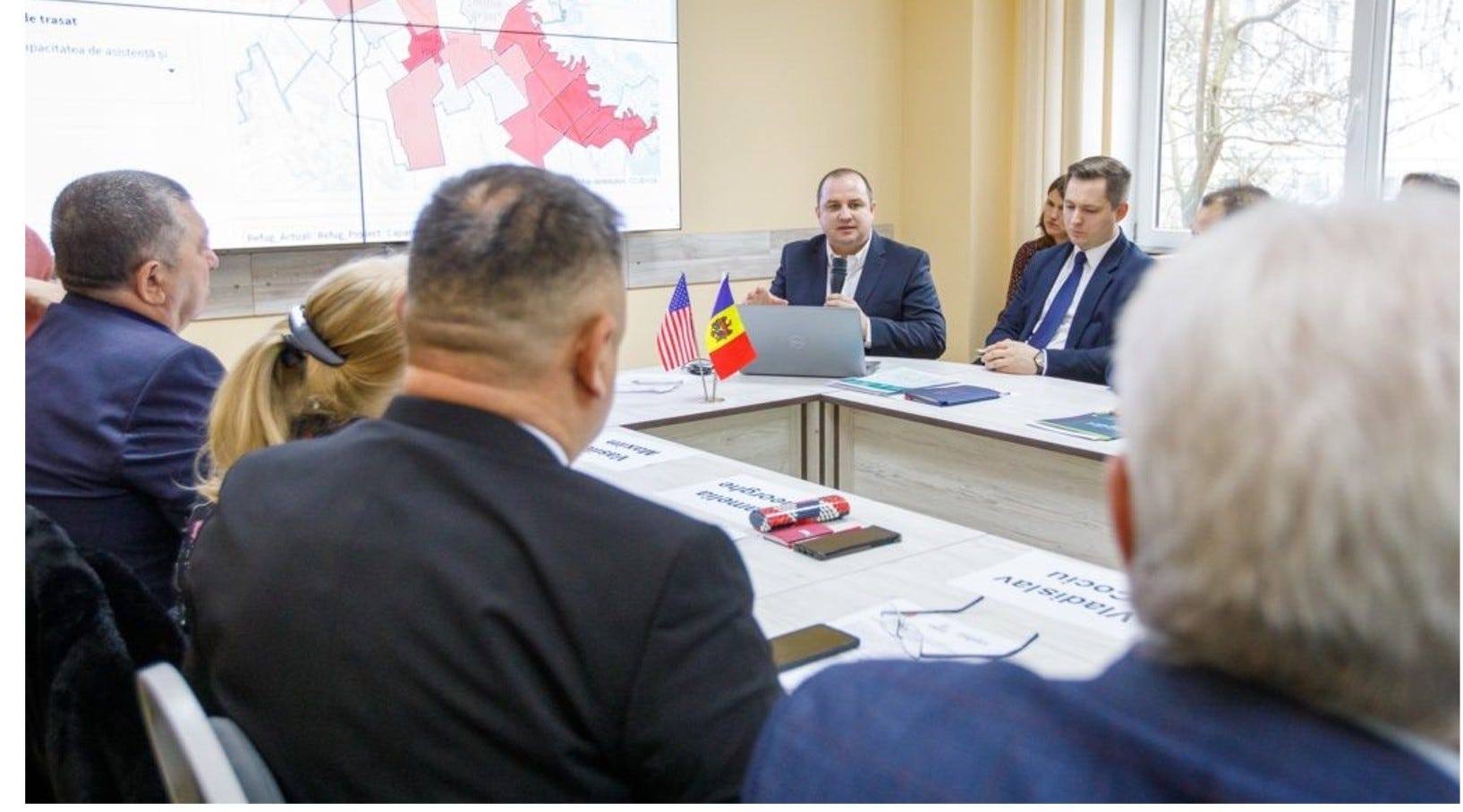
At the opening, Alexei Buzu, Moldovan Minister of Labor and Social Protection, noted: “The initiative to create the first Data Review Room in Ștefan Vodă is welcome” and would allow the rayon to prepare for future interventions in real time.
Currently, there are still 950 refugees in Ștefan Vodă––representing roughly 1.5 percent of the district’s population––and all of them require varying degrees of state aid. Accordingly, the SAFP Directorate monitors weekly data on refugee flow in each locality of the rayon, collecting data on all the points listed above (e.g., location, demographics, housing situation, unaccompanied children).
These data are collected weekly and sent to the data review room by Directorate officials who in turn received the data from community social workers via email or Viber. All data is collected and stored using a specialized Excel data collection register that was developed by D4I, Palladium.
After the data are triangulated and recorded in a single database, the Directorate’s team conducts regular data reviews, following set procedures, to decide where and how much aid will be provided for refugees. Also, data are presented to the Ministry of Labor and Social Protection upon request to facilitate their aid planning as well.
Weekly analysis of performance against targets for priority indicators is an important part of the process, as it helps improve transparency and enables continuous feedback and learning for ongoing program adaptation.
The Data Review Room will also allow simulation of various scenarios of refugee inflows and thus support the local authorities to prepare the resources and services needed to cope with any possible shock that might occur at any moment.
— Camelia Gheorghe, Chief of Party, D4I/Moldova, Palladium
The Outlook
Given the recency of its launch, the data review room in Ștefan Vodă is just at beginning of the monitoring, evaluation, and learning process. However, at the moment, the D4I, Palladium team is working with the Directorate to establish a data-sharing agreement with United Nations agencies and trying to win acceptance by local public authorities. The project is also developing a tool for automatized collection and visualization of data using Kobo toolbox, a software that allows organizations to build advanced and easy-to-implement surveys, skip logic and validation for consistent high-quality results, and edit Excel forms to meet complex needs.
In the medium term, these efforts aim to fully transition management and technical assistance roles to the Directorate’s local officials.
The data review room is intended to be adaptable to future challenges and crises, rather than just a temporary solution to the refugee crisis. D4I plans to standardize procedures and train staff so the room will be a durable fixture of Ștefan Vodă’s long-term development planning and evaluation.
The Ukraine refugee crisis is far from over, and the innovations in Ștefan Vodă are only a small part of Moldova’s ongoing efforts to help those in need. However, by integrating technology and human expertise, the rayon is better placed to deal with present and future challenges than ever before.
Palladium Situation Room Meetings
To date, Palladium has convened 481 situation room meetings, with participants from epidemiology, primary health care, laboratories, human resources units—and now, migration and refugee protection. On average, 20 participants attend each situation room meeting. Together, they collaboratively solve the performance issues uncovered through systematized review of data. Participants have identified and completed over 650 discrete action items and contributed to the documentation of dozens of data use cases.
[1] United Nations High Commissioner for Refugees (UNHCR).