
Even on the rainiest afternoons in Piggs Peak, health workers can protect what matters most
How a government-owned electronic medical record is transforming care in Eswatini: CMIS in Hhohho Region

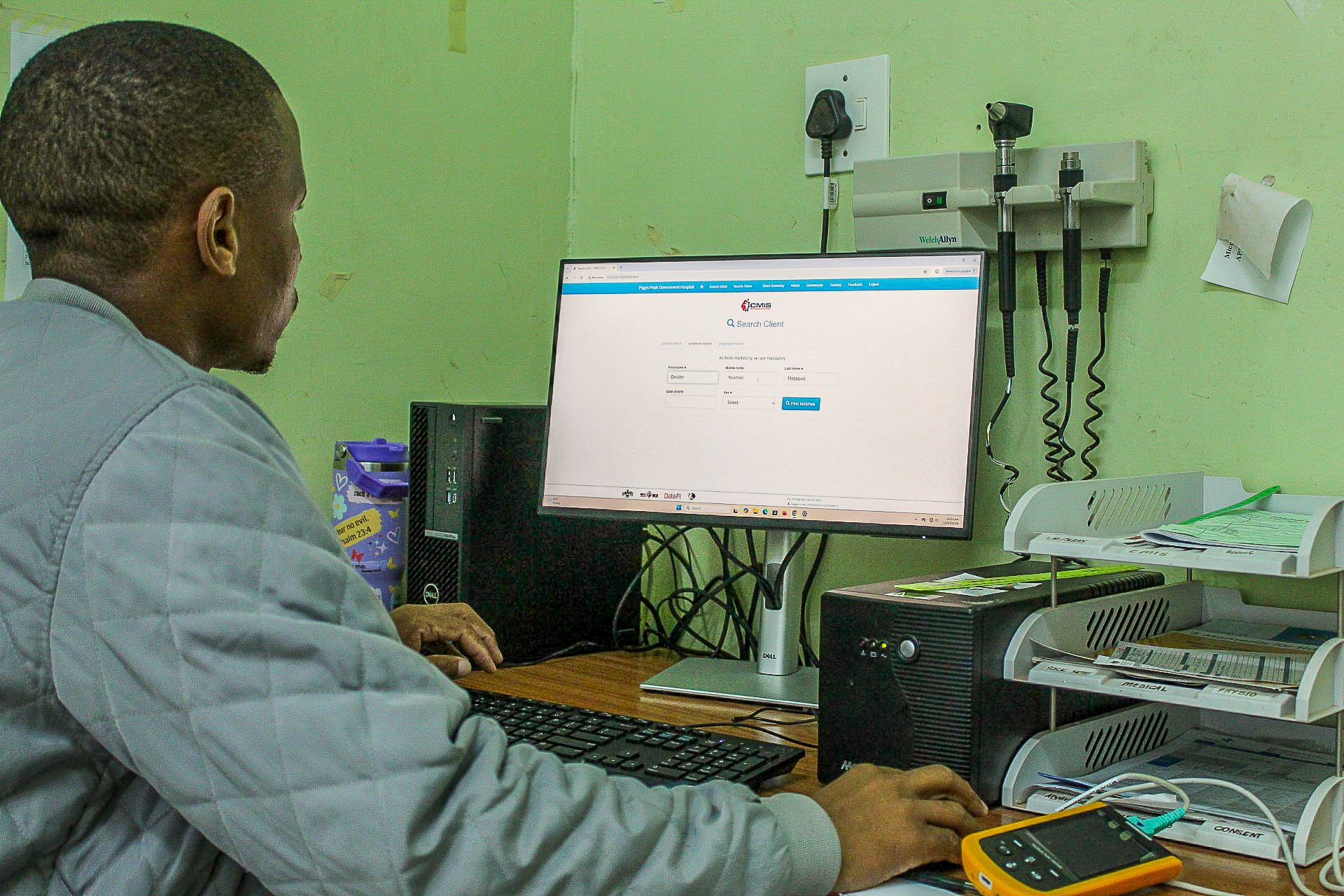
On stormy days in Piggs Peak, Eswatini, the rain is relentless. Located in the far northwest of Hhohho Region, and surrounded by dramatic highveld landscape, Piggs Peak feels remote despite being a roughly 40-mile drive from the capital, Mbabane.
Splashing through doorways and trickling through windows at a local health clinic, the rain dampens everything it touches—including the fragile green patient cards that hold a person’s entire medical history.
On such days, nurses, already stretched thin with high workloads and lengthy paper-based procedures, must piece together a patient’s story from smudged ink and imperfect memory. This slows down patient intake and disrupts healthcare.
Today, however, damp patient records are increasingly a thing of the past.
With Eswatini’s Client Management Information System (CMIS), an open-source, government-owned electronic medical record (EMR), care continues seamlessly, rain or shine.
Now used in 73% of the country’s health facilities, with 233 live sites, CMIS gives clinicians instant access to accurate, complete client records, using only a unique ID number and role-based access control to ensure patient privacy. What’s more, by backing up health records in government-owned cloud systems, CMIS ensures that the records ‘travel’ with the patient: if a person moves to a new district, they can be sure that their entire medical history with be available to the clinicians at their new local clinic.
For Nurse Sandile Magagula, who works in the outpatient department at Piggs Peak Government Hospital, the impact is unmistakable. He describes CMIS as “very convenient and a major improvement to service delivery.” The system’s guided modules prompt clinicians through essential questions, ensuring nothing is missed and that every client receives comprehensive, consistent care. What once required guesswork now takes just a few precise clicks, Magagula explains.
He also highlights another critical improvement: patient confidentiality. In the past, green patient cards were easily misplaced, leaving sensitive information exposed. Now, CMIS has introduced transformative improvements to storing patient info. The system is designed with strong safeguards like multi-factor authentication and encryption in-transit and at-rest to protect client data. Access is carefully controlled and audit logs ensure responsible oversight, and users only see the information necessary to provide care at their specific point of service (i.e., they cannot access sensitive data from health areas or facilities outside of their point of service). This not only secures patient records but also reinforces trust between clients and service providers.
CMIS doesn’t just save time—it strengthens clinical decision-making, continuity of care, and client dignity. With more reliable records and tailored data visualizations, health officials can see the whole picture and make informed public health decisions in their districts. And even on the rainiest afternoons in Piggs Peak, health workers can rely on a system built to protect what matters most: the client.
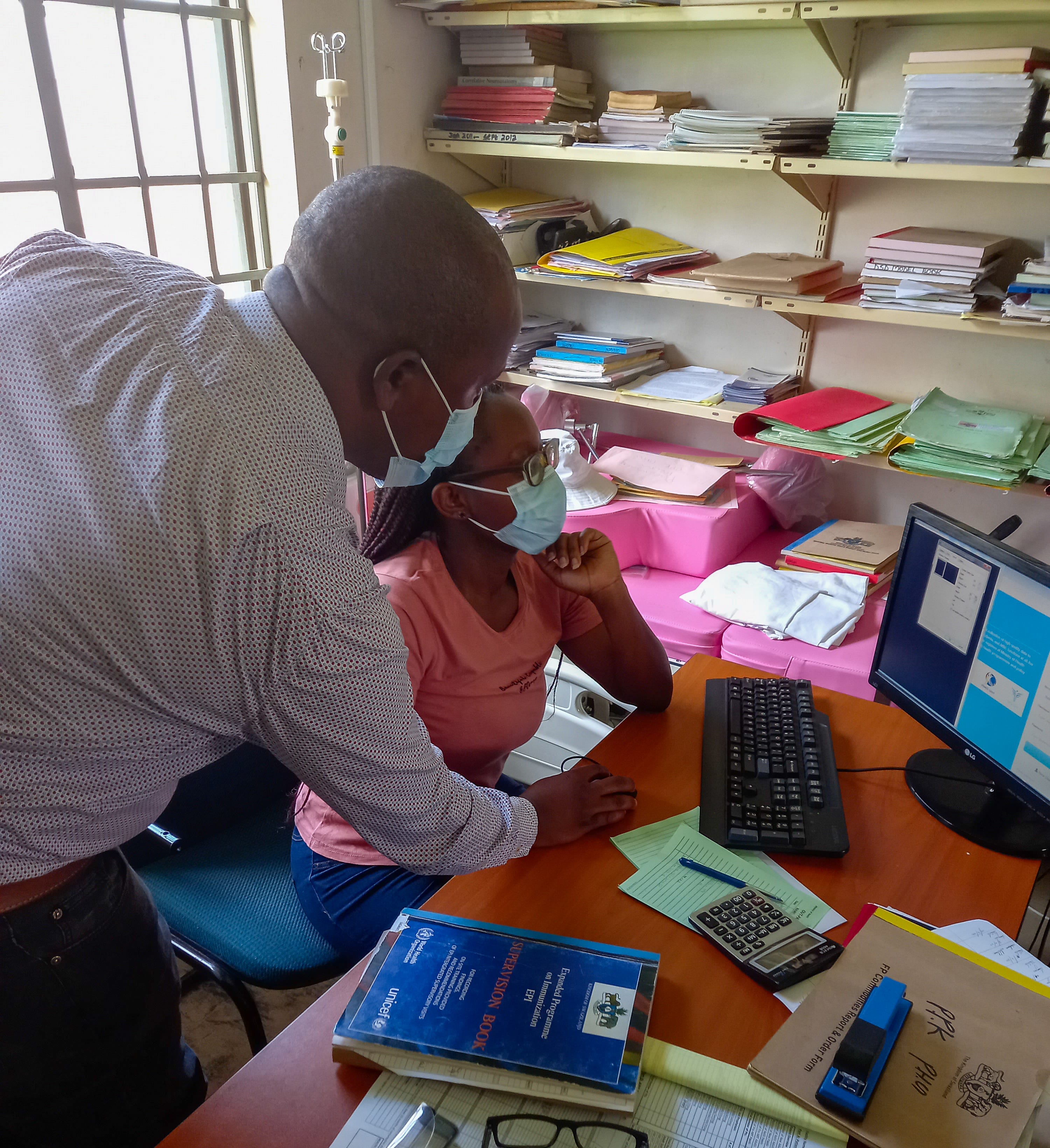
Issues remain, such as occasional slowness caused by poor connectivity, as Magagula notes. But CMIS is constantly undergoing improvements, such as ongoing efforts by the Ministry of Health, the leading telecommunications provider MTN Eswatini, and the U.S. Government-funded Data for Implementation (Data.FI) project to actively strengthen connectivity to ensure fast and reliable access nationwide.
Thanks to CMIS, no patient’s history is at risk of being washed away in the rain. Eswatini is building a future where every visit to a health clinic begins with clarity and transparency, and every client receives the care they deserve.